“It’s okay to say the word!”: what visitors learned about talking about suicide in detention
Impact of our training on responding to the risk of suicide: one of the volunteer visitors had a conversation with a person currently in detention about suicide.

Two days after our training on responding to risk of suicide, one of the volunteer visitors had a conversation with a person currently in detention about suicide. They said that they were able to have this conversation openly and to escalate properly as a result of this training.
“I felt a lot more confident openly discussing things”, a volunteer visitor with Detention Action told us.
Why visitors are in a unique position
Immigration detention causes profound harm. Distress, uncertainty, and powerlessness are normal responses to being incarcerated and stripped of your freedom. For many in detention, this can also include an increased risk for suicide.
Many people also find it hard to talk about suicidal and self-harm thoughts at all, especially to the detention centre staff, the Home office officials and medical professionals. The main process for monitoring people at risk, the Assessment Care in Detention and Teamwork (ACDT), is led by custodial staff rather than healthcare. AVID members historically noted that the response to this is isolation and surveillance - something which can increase the level of harm and risk for someone in detention
Visitors are different. We are not part of the system holding someone. We show up, we listen, and we treat the person we are visiting as human being. For some people, visitors are the only outside people someone in detention speaks to in a week - the only person that they can open up to and trust. That puts volunteer visitors in a position most volunteers aren’t prepared for.
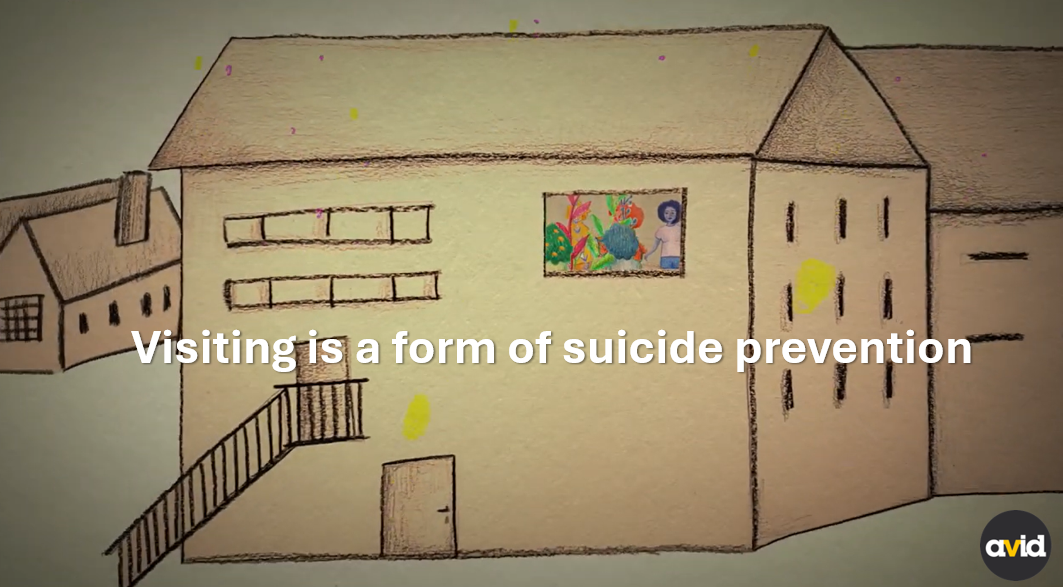
Visiting is a form of suicide prevention.
What the training offers
Our training is led by Saba, AVID’s Senior Network Coordinator. It is built around the realities of detention and prison. It covers:
- Safe language when talking about suicide
- Risk and protective factors in detention and prison
- Barriers to supporting someone
- Trauma-informed support
- Safety planning
- How we support each other and build cultures of care
Saba had previously worked in Australia’s national postvention services, supporting people and communities affected by a death by suicide. She has delivered support within prisons and worked closely with migrant services on responses to suicidality.
It is important to note that suicidality refers to a spectrum of behaviours and intentions, and self-harm is distinct from this. However, while this training focuses on suicidality, we also acknowledge that the principles and tools for responding to both of these often overlap (as well as the detention/ prison policies involved). Our training therefore is on responding to risk of suicide, but can also be helpful for understanding how respond to self-harm in detention and prison as well.
What attendees told us so far
As part of gathering feedback, all attendees rated the training 5 stars. Here is what stood out for them:
- A safe space. One visitor said they really appreciated how the session was set up: encouraging people to get comfortable, to turn off their camera or leave if they needed to, and acknowledging that many of us may have experienced suicidality or been affected by suicide.
- Permission to talk openly and equipped to do so. Another said one of the most important things was hearing again that it is okay to talk openly about suicide, and not to be scared of using words like “suicide” or “end your life” when you are worried about someone.
- The importance of tailored training. General training on suicide and safeguarding is not as applicable for supporting people in detention/ prisons – environments where people are unable to access their usual coping strategies, are isolated from their family and friends and where there are specific policies and processes in place. This training takes these unique challenges and barriers into consideration, and people have an opportunity to share their experiences with others in the room in similar roles.
Are you interested in this training?
"I think it would be a very useful must-have session for volunteers… This training has the potential to save lives” The feedback shared by one of the visitors who attended the previous training
If you are interested in attending this training, here is what we want you to know:
- You don’t need experience. The first partof the sessions builds foundational understanding of the issue and draws on theknowledge and skills of the people in the room.
- It is your choice how you take part. Whilewe believe these conversations are held better face to face, we have run thissession both online and in-person to accommodate people’s varied needs andschedules. We also understand that suicide is a deeply personal topic for manyof us and encourage people to step out at any point during the session orcontact us ahead of time with any accessibility requests.
- It is free for the AVID network (Visitors, visitors groups and people with lived experience). The training is for visitor groups and select partners who directly support people in detention. If you aren’t sure whether it applies to you, email us and we’ll work it out together.
Join us:
If you think this training could be useful for your group – please reach out and we will also announce further joint training dates later next year.
For any questions or support:
If this blog brings up difficult feelings, or you are worried about yourself or someone else, Samaritans are free to call on 116 123.
Following the training, you are also welcome to contact Saba with any questions, for support or just to have a conversation.
AVID also hosts monthly peer support groups on Wednesday evenings that all visitors are welcome to join. This is a space where visitors are welcome to bring anything they’d like into the space – whether these are practical or specific challenges, or discussions around supporting people and the impact that has on us.
Please contact us to find out more.
For more information:
Please see our Visitors Handbook for information on visitor wellbeing, Rule 35. ACDT and a template for reflective practice.